The Reiss Lab at Hunter College studies dolphin cognition and communication, comparative animal cognition, and the evolution of intelligence.
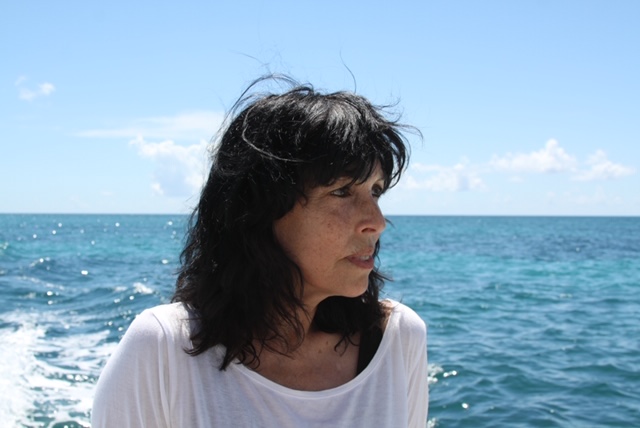
Diana Reiss is a Professor in the Department of Psychology at Hunter College and in the Graduate Center of the City University of New York. She and her colleagues demonstrated mirror self-recognition in bottlenose dolphins and in Asian elephants, and she pioneered the use of underwater keyboards to study dolphin communication and learning.
Selected publications
Self-recognition and animal minds
- D. Reiss, L. Marino (2001). Mirror self-recognition in the bottlenose dolphin: a case of cognitive convergence. Proceedings of the National Academy of Sciences 98 (10), 5937-5942.
- J. M. Plotnik, F. B. M. de Waal, D. Reiss (2006). Self-recognition in an Asian elephant. Proceedings of the National Academy of Sciences 103 (45), 17053-17057.
- L. Marino, R. C. Connor, R. E. Fordyce, L. M. Herman, P. R. Hof, L. Lefebvre, et al., including B. McCowan and D. Reiss (2007). Cetaceans have complex brains for complex cognition. PLoS Biology 5 (5), e139.
- J. M. Plotnik, F. B. M. de Waal, D. Moore III, D. Reiss (2010). Self-recognition in the Asian elephant and future directions for cognitive research with elephants in zoological settings. Zoo Biology 29 (2), 179-191.
- P. Foerder, M. Galloway, T. Barthel, D. E. Moore III, D. Reiss (2011). Insightful problem solving in an Asian elephant. PLoS ONE 6 (8), e23251.
- D. Reiss (2011). The Dolphin in the Mirror: Exploring Dolphin Minds and Saving Dolphin Lives. Houghton Mifflin Harcourt.
- P. Low, J. Panksepp, D. Reiss, D. Edelman, B. Van Swinderen, C. Koch (2012). The Cambridge Declaration on Consciousness. Francis Crick Memorial Conference.
- R. Morrison, D. Reiss (2018). Precocious development of self-awareness in dolphins. PLoS ONE 13 (1), e0189813.
- A. Mildener, D. Buchman, S. Ragir, D. Reiss (2026). Evidence for mirror self-recognition in beluga whales (Delphinapterus leucas). PLoS ONE 21 (5), e0348287.
With the McCowan Lab
- D. Reiss, B. McCowan (1993). Spontaneous vocal mimicry and production by bottlenose dolphins (Tursiops truncatus): evidence for vocal learning. Journal of Comparative Psychology 107 (3), 301.
- B. McCowan, D. Reiss (1995). Quantitative comparison of whistle repertoires from captive adult bottlenose dolphins (Delphinidae, Tursiops truncatus): a re-evaluation of the signature whistle hypothesis. Ethology 100 (3), 194-209.
- B. McCowan, D. Reiss (1995). Whistle contour development in captive-born infant bottlenose dolphins (Tursiops truncatus): role of learning. Journal of Comparative Psychology 109 (3), 242.
- D. Reiss, B. McCowan, L. Marino (1997). Communicative and other cognitive characteristics of bottlenose dolphins. Trends in Cognitive Sciences 1 (4), 140-145.
- C. Gubbins, B. McCowan, S. K. Lynn, S. Hooper, D. Reiss (1999). Mother-infant spatial relations in captive bottlenose dolphins, Tursiops truncatus. Marine Mammal Science 15 (3), 751-765.
- B. McCowan, L. Marino, E. Vance, L. Walke, D. Reiss (2000). Bubble ring play of bottlenose dolphins (Tursiops truncatus): implications for cognition. Journal of Comparative Psychology 114 (1), 98.
- B. McCowan, D. Reiss (2001). The fallacy of “signature whistles” in bottlenose dolphins: a comparative perspective of “signature information” in animal vocalizations. Animal Behaviour 62 (6), 1151-1162.
- S. Hooper, D. Reiss, M. Carter, B. McCowan (2006). Importance of contextual saliency on vocal imitation by bottlenose dolphins. International Journal of Comparative Psychology 19 (1).
With the Magnasco Lab
- E. A. Ramos, B. Maloney, M. O. Magnasco, D. Reiss (2018). Bottlenose dolphins and Antillean manatees respond to small multi-rotor unmanned aerial systems. Frontiers in Marine Science 5, 316.
- S. F. Woodward, D. Reiss, M. O. Magnasco (2020). Learning to localize sounds in a highly reverberant environment: machine-learning tracking of dolphin whistle-like sounds in a pool. PLoS ONE 15 (6), e0235155.
- J. Meyer, M. O. Magnasco, D. Reiss (2021). The relevance of human whistled languages for the analysis and decoding of dolphin communication. Frontiers in Psychology 12, 689501.
- E. A. Ramos, M. Steinblatt, R. Demsey, D. Reiss, M. O. Magnasco (2023). Abnormal behavioral episodes associated with sleep and quiescence in Octopus insularis: possible nightmares in a cephalopod? bioRxiv 2023.05.11.540348.
- E. A. Ramos, J. J. Kiszka, D. Reiss, M. O. Magnasco (2024). Coastal dolphins provide foraging opportunities to benthic-feeding seabirds in a tropical seagrass ecosystem. Behaviour 161 (6), 495-503.